
Go Back
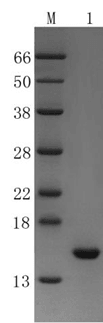
Recombinant Human Fibroblast Growth Factor-acidic (rh-aFGF)
aFGF, also known as FGF1. It has trophic and mitogenic differentiation effects on a variety of cells derived from mesoderm and neuroectoderm, such as BALB/c 3T3 fibroblasts, capillaries and endocardial cells, myoblasts, vascular smooth muscle cells, mesothelial cells, astrocytes and glial cells, adrenal cortex, etc, it has a wide range of biological effects and potential clinical application value. The aFGF molecule contains a heparin binding region, which can increase the activity on some cells after binding of aFGF and heparin, and a certain amount of heparin can increase the stability of aFGF and prevent aFGF from being denatured by heat, extreme pH and proteolytic hydrolysis. Recombinant human acidic fibroblast growth factor (rh-aFGF) expressed in E. coli is a non-glycosylated single-chain protein containing 141 amino acids with a molecular weight of 16.0kDa.
Size: 100 μg,1mg,10mg,100mg
Formulation: Lyophilized powder
Mol. Wt.: 16.0kDa
Theory pI: 7.73
Resources: Escherichia coli (E. coli)
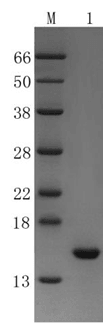
Purity: ≥ 95% (SDS-PAGE detection)
Endotoxin: <50 EU/mg
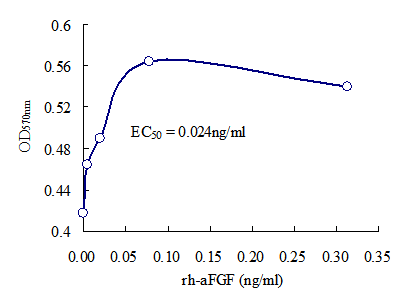
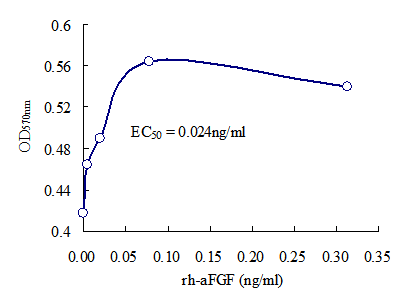
Activity: ≥ 2.5 × 10*5 IU/mg protein
Storage Condition: -20oC
Transport: Ambient Temp
Storage Duration: 3 years
Size: 100 μg,1mg,10mg,100mg
Formulation: Lyophilized powder
Mol. Wt.: 16.0kDa
Theory pI: 7.73
Resources: Escherichia coli (E. coli)
Purity: ≥ 95% (SDS-PAGE detection)
Endotoxin: <50 EU/mg
Activity: ≥ 2.5 × 10*5 IU/mg protein
Storage Condition: -20oC
Transport: Ambient Temp
Storage Duration: 3 years
More Details